Zomato Ads vs Swiggy Ads 2026: The Restaurant Owner's Guide to Spending Less and Ranking Higher
Zomato and Swiggy control over 90% of India's food delivery market — and most restaurants overpay for both. Here's how to structure Zomato Ads and Swiggy Ads spend, avoid the CPC traps, and pair them with Meta Ads for real profit.


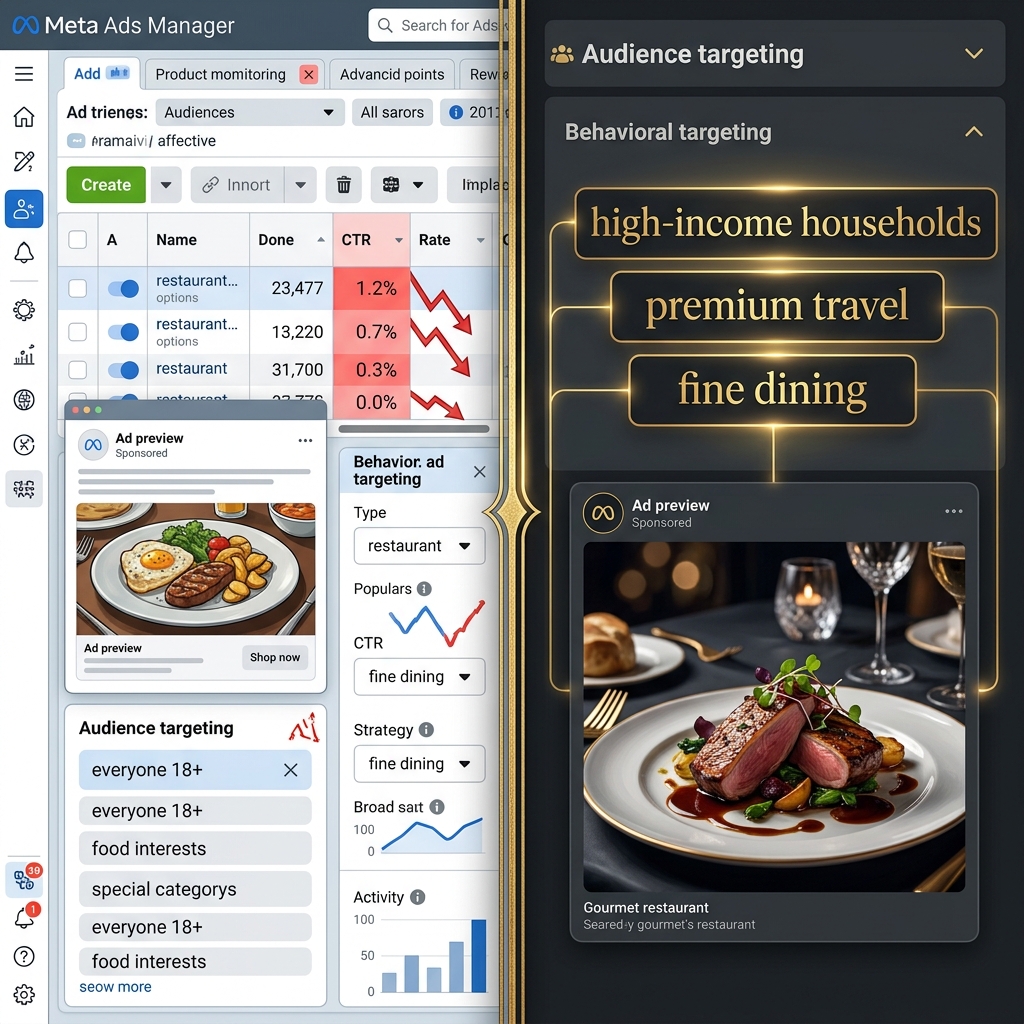
Zomato and Swiggy together control more than 90% of India's online food delivery market. If you run a restaurant, café, or cloud kitchen, you are almost certainly on both — and you are almost certainly overpaying on at least one of them.
We audit restaurant marketing accounts every week at ThePieCraftMarketing, and the pattern is consistent: owners treat Zomato Ads and Swiggy Ads as a single "aggregator marketing" line item, dump a flat monthly budget into both, and never separate what is actually working from what is quietly burning margin. That ends today. This guide breaks down exactly how Zomato Ads and Swiggy Ads work in 2026, where each platform wins, the specific mistakes draining your CPO (cost per order), and how to build an aggregator strategy that complements — rather than competes with — your Meta Ads spend.
How Zomato Ads Actually Work in 2026
Zomato Ads run primarily on a CPC (cost-per-click) auction model inside the app's search and discovery surfaces — "Ads" tagged listings above organic results, category pages, and the homepage carousel. You are bidding against every restaurant in your cuisine category and delivery radius for the same eyeballs.
Zomato's real strength is not the ad auction itself — it's organic ranking. Zomato's algorithm weighs ratings, review recency, menu photo quality, delivery time (KPT — kitchen preparation time), and order acceptance rate far more heavily than most restaurants realise. A restaurant with a 4.3+ rating, fast KPT, and fresh reviews will often out-rank a heavily-boosted competitor organically — for free.
What Zomato Ads Are Actually Good For
- New restaurant launches: Zero organic history means zero organic ranking. Ads are the only way to get initial visibility while reviews accumulate.
- Category breakthrough in dense metros: Bandra, Koramangala, and Connaught Place have hundreds of restaurants per cuisine tag. Ads buy you above-the-fold visibility that organic ranking alone cannot in month one.
- New menu or cuisine line launches: Promoting a new dine-in-only tasting menu or a new delivery-only sub-brand needs a visibility injection.
Where Zomato Ads Waste Money
The single biggest leak we find auditing Zomato accounts: restaurants running Ads spend flat, every day, all year, regardless of performance — instead of treating it as a dial they tighten and loosen based on CPO. If your blended CPO (ad spend ÷ orders attributed) exceeds 12-15% of average order value, the campaign is not profitable — it's subsidising Zomato's growth, not yours.
90%+
Combined market share of Zomato and Swiggy in India's online food delivery market
Industry estimates, 2026
How Swiggy Ads Actually Work in 2026
Swiggy's ad product — managed through the Swiggy partner portal — operates similarly to Zomato's, but Swiggy's real differentiator is its repeat-order engine and residential-area penetration. Swiggy consistently shows stronger order frequency in Tier 1 residential pockets and stronger loyalty-driven repeat behaviour through Swiggy One.
What Swiggy Ads Are Actually Good For
- Residential-heavy delivery zones: If your kitchen serves dense residential clusters rather than commercial/office areas, Swiggy typically delivers a lower CPO than Zomato for the same spend.
- Repeat-customer campaigns: Swiggy's tools for re-engaging past customers with targeted offers tend to outperform Zomato's for retention-style pushes.
- Late-night and weekend volume: Swiggy's order density in many metros skews later and weekend-heavier than Zomato's — relevant if your kitchen's peak hours match.
Where Swiggy Ads Waste Money
The same flat-spend mistake applies, but with an added trap: restaurants running identical creative, offers, and targeting across both platforms. Zomato and Swiggy have different user bases with different behavioural patterns — copy-pasting one platform's strategy onto the other consistently underperforms a platform-specific approach.
★ AGENCY INSIGHT In the majority of aggregator accounts we audit, restaurants split budget 50/50 between Zomato and Swiggy by default — not by data. When we re-split spend based on actual CPO by platform and by zone, most clients recover 20-30% of their aggregator budget within the first month without losing a single order.
Zomato Ads vs Swiggy Ads: Which Should Get More Budget?
| Factor | Zomato | Swiggy |
|---|---|---|
| Brand visibility & premium positioning | Stronger — richer restaurant pages, better photo real estate | Functional but more utilitarian layout |
| Organic search ranking | Strong SEO-like ranking signals reward consistency | Ranking weighted more toward repeat behaviour |
| Residential penetration | Solid in metros | Typically stronger in dense residential pockets |
| Repeat/loyalty tooling | Zomato Gold/loyalty layer | Swiggy One — strong repeat-order driver |
| Best for | Premium positioning, new launches, metro visibility | Volume, residential delivery, retention pushes |
Neither platform is universally "better." The right split depends on your kitchen's location, your average order value, and whether you're optimising for premium covers or delivery volume. For a full breakdown of when aggregator ads make sense versus building owned demand, see our comparison: Meta Ads vs Zomato Ads.
The Aggregator Trap: Why Zomato and Swiggy Should Never Be Your Whole Strategy
Here is the structural problem no aggregator will tell you: every rupee spent on Zomato Ads or Swiggy Ads builds Zomato's and Swiggy's customer database — not yours. You get the order. They keep the relationship, the phone number, the ordering history, and the ability to re-market that customer to your competitor next week with a better discount.
Restaurants that rely on aggregators for 80-100% of their order volume have zero pricing power and zero owned audience. The moment commission rates rise — and they have risen consistently year over year — margin compresses with no lever to pull.
The Fix: A Three-Layer Demand Stack
- Layer 1 — Aggregators for discovery: Keep Zomato and Swiggy for what they're genuinely good at: new customer discovery and delivery logistics. Budget them to a target CPO, not a flat monthly number.
- Layer 2 — Meta Ads for owned demand: Run Meta Ads to build a first-party audience and drive direct orders (via your own WhatsApp ordering or website) that carry zero aggregator commission.
- Layer 3 — WhatsApp for retention: Every aggregator customer who becomes a repeat guest should eventually move into your own WhatsApp channel, where re-engagement costs you nothing per message and nothing per order.
This is precisely the model we recommend to every restaurant client we onboard: aggregators for acquisition, owned channels for margin.
For the underlying cost picture — what commission, GST and platform fees actually take per order — see our breakdown of what Zomato and Swiggy really cost you in 2026.
Frequently Asked Questions: Zomato Ads & Swiggy Ads
How much should a restaurant spend on Zomato Ads and Swiggy Ads per month?
There is no fixed number — the right spend is whatever keeps your CPO under 12-15% of average order value while still generating meaningful order volume. Most restaurants in Tier 1 metros run Rs. 15,000-60,000/month combined across both platforms, adjusted weekly based on CPO, not set once and forgotten.
Is Zomato Ads or Swiggy Ads better for a new restaurant?
Both are necessary in month one, since a new listing has no organic ranking history on either platform. Run both at a moderate budget for the first 60-90 days while ratings and reviews build, then re-split spend based on which platform is delivering a lower CPO for your specific location and cuisine.
Can I rank on Zomato or Swiggy without paying for ads?
Yes — organic ranking on both platforms rewards rating quality, review recency, photo quality, fast kitchen preparation time, and high order-acceptance rate. A well-run kitchen with strong operational discipline can rank competitively without heavy ad spend, though ads still help during launch and high-competition periods.
Should I use Zomato Ads and Swiggy Ads instead of Meta Ads?
No — they solve different problems. Aggregator ads capture people already browsing for food to order right now. Meta Ads create demand and build an audience you own, independent of aggregator commissions. The strongest restaurant marketing strategies in 2026 use both, deliberately, rather than choosing one. See our Meta Ads mistakes guide to make sure your owned-channel spend isn't being wasted too.
The Bottom Line: Aggregators Are a Channel, Not a Strategy
Zomato and Swiggy are not going anywhere, and pretending you can ignore them is not realistic for most Indian restaurants. But treating them as your entire marketing strategy — rather than one layer of a demand stack that also includes owned channels — is the single most common reason restaurant margins stay thin even as order volume grows.
Audit your CPO by platform this week. Re-split budget based on what the data says, not what you spent last month. And make sure every aggregator order is a chance to eventually earn a direct, commission-free relationship with that guest.
Want Us to Audit Your Aggregator Spend?
ThePieCraftMarketing works exclusively with restaurants, cafés and luxury hotels. Book a free 30-minute strategy call and we'll review your Zomato Ads, Swiggy Ads, and Meta Ads spend together — and show you exactly where your budget is leaking.
Ready to apply these strategies?
We help luxury venues drive predictable direct revenue.