Meta Ads for Fine Dining Restaurants: The Complete 2026 Strategy Guide
Stop wasting your restaurant ad budget. Learn the exact Meta Ads funnel strategy for fine dining — from HNI targeting to BOFU creative.


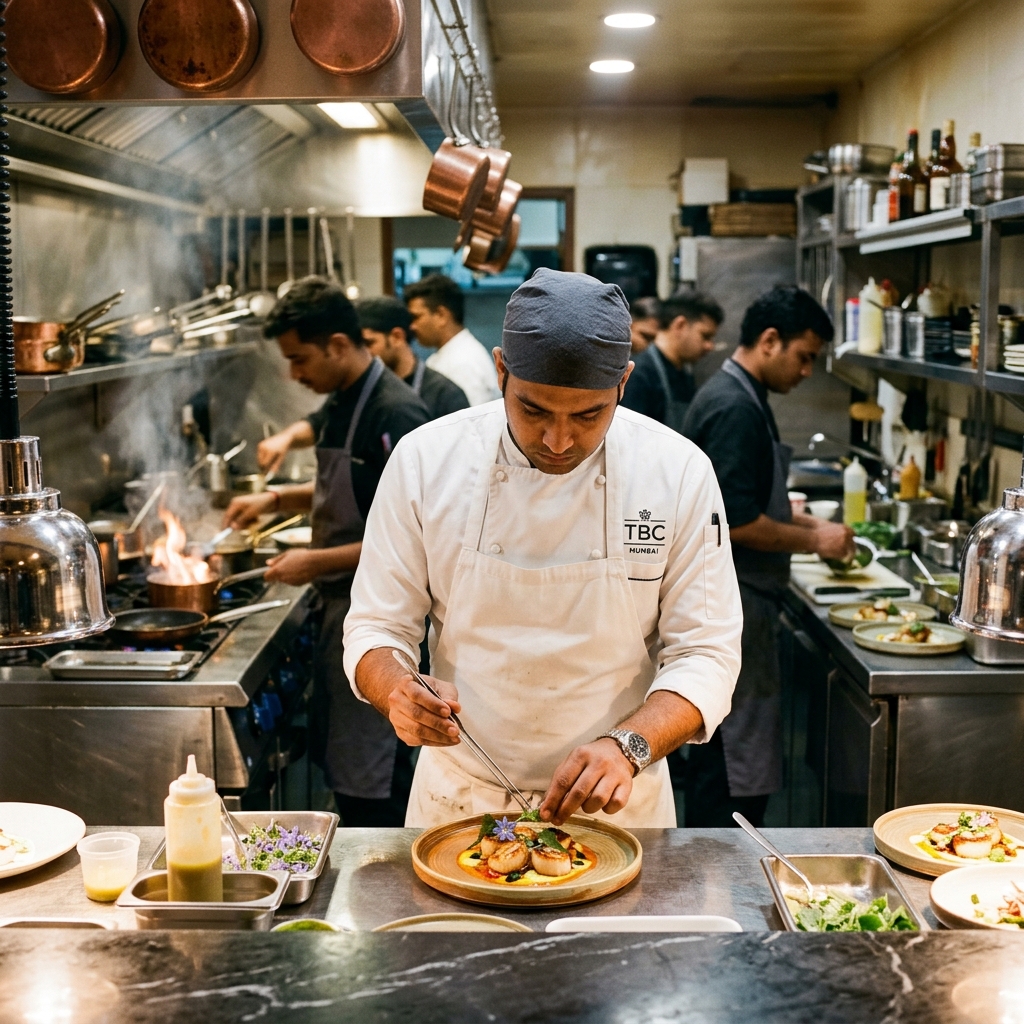
Most premium restaurant owners running Meta Ads are doing it wrong. Not because they lack creativity — but because they're using mass-market tactics on a luxury product.
Your ₹4,500 tasting menu doesn't need reach. It needs precision.
According to Meta's own benchmarks, restaurant ads in India see an average click-through rate of 0.9%. The top-performing fine dining campaigns we've run clock in at 3.2%+. The difference isn't budget. It's strategy.
The fine dining market in India is projected to grow at 18% CAGR through 2027, yet the majority of premium restaurant ad spend still flows into poorly structured campaigns that attract the wrong audience at the wrong moment in their buying cycle.
By the end of this guide, you'll know exactly how to build a full-funnel Meta Ads system that fills your dining room with high-intent, high-value guests — not deal-hunters. You'll understand why your current campaigns are leaking revenue, how to structure a campaign architecture that mirrors how affluent diners actually make decisions, and what creative formats drive reservations at premium cover prices.
Why Standard Meta Ad Strategies Fail Premium Restaurants
The Mass-Market Trap
Most Meta Ads agencies build campaigns optimised for volume — low CPCs, broad targeting, maximum reach. That model works for a QSR selling ₹99 burgers. For a fine dining restaurant with a 48-cover room and a ₹6,000 average spend per head, it's a disaster.
When you optimise for reach, Meta's algorithm delivers your ad to the widest possible audience. The result? Your beautifully plated sea bass is shown to someone who last dined at a highway dhaba. Irrelevant impressions erode your brand. Worse, they inflate your costs without filling a single premium seat.
A restaurant advertising to a broad Mumbai audience on Meta wastes an estimated 60–70% of its budget on users who would never convert at a premium price point. That's not a media problem. That's a strategy problem.
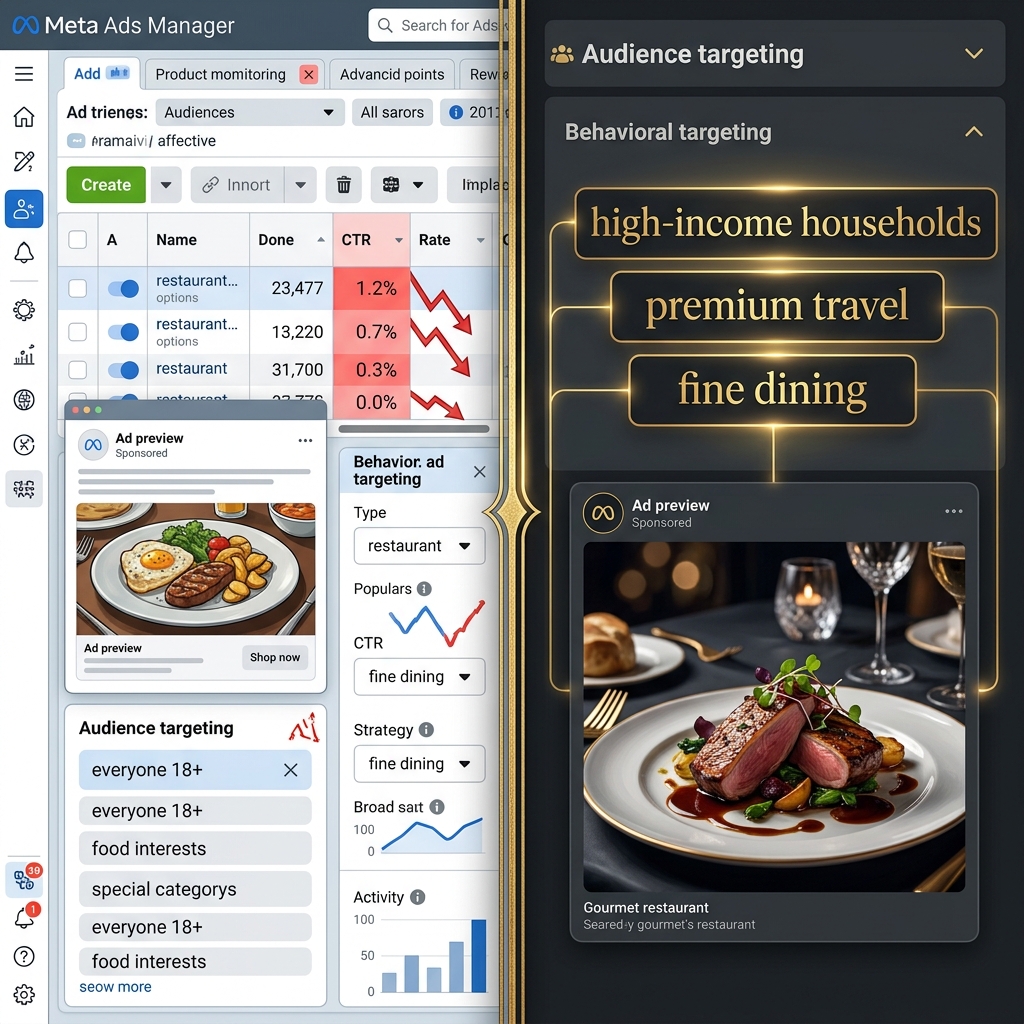
The Wrong Objective Problem
Choosing 'Traffic' or 'Reach' as your campaign objective tells Meta you want clicks and impressions. But what you actually want is reservations. Or at minimum, quality inquiries.
The moment you switch your objective to 'Leads' or 'Conversions' — and pair it with a properly configured Meta Pixel — the algorithm starts learning who actually completes a booking action. That data compounds over time. Within 30 days of running a conversion-optimised campaign, your cost per qualified lead can drop by 35–50%.
★ AGENCY INSIGHT At ThePieCraft, the first thing we audit when taking over a fine dining client's ad account is the campaign objective. In 8 out of 10 cases, we find restaurants running Traffic campaigns and wondering why footfall isn't converting. We fix the objective first. Results follow within the first billing cycle.
Budget Allocation That Bleeds Revenue
The industry benchmark for premium restaurant marketing spend is 3–5% of monthly revenue. But how that budget is split matters more than the total amount. Most restaurants dump 80% into a single awareness campaign.
The high-performers split it with precision:
- 50% — Conversion campaigns (reservation-intent audience)
- 30% — Retargeting (warm website & Instagram visitors)
- 20% — Awareness / Lookalike expansion
This structure ensures you're not just buying eyeballs — you're moving qualified prospects through a buying decision at every stage of their consideration cycle. These same premium audience structures are highly effective when deployed for luxury hotel bookings; see the full breakdown inside our Direct Booking Strategy for Luxury Hotels.
Building a High-Converting Meta Ads Funnel for Fine Dining
Top of Funnel — Attracting the Right Affluent Audience
The most powerful targeting lever for luxury F&B on Meta is not demographics. It's behavioural and interest stacking. You're looking for individuals who exhibit the following signals:
- Frequent international travel (Business/First Class intent patterns)
- Interest in luxury goods, premium wine, whisky, and gastronomy
- Household income in the top 10% of Metro India
- Engagement with luxury lifestyle content: Forbes India, Condé Nast Traveller, GQ
Layer these with geographic micro-targeting around premium residential and commercial zones in your city — not the entire metro. A fine dining concept in Lower Parel doesn't need to advertise to Virar. Precision beats volume every time.
Middle of Funnel — Converting Interest Into Intent
Warm audiences are gold. These are people who've visited your website, watched 50%+ of your Reel, or engaged with your Instagram profile in the last 30–60 days.
This is where you run your highest-converting creative: chef stories, behind-the-scenes plating videos, seasonal menu reveals, and 'Table for Two' narratives with authentic guest social proof. Your middle-funnel ads must include a frictionless CTA — not 'Visit Website.' Use a direct WhatsApp chat button or a Meta Lead Form that captures name, phone, and preferred date. Once these guests initiate contact, you can transition them into an automated, zero-ad-spend nurture stream. Learn the exact sequence in our WhatsApp Marketing for Restaurants Playbook.
Fine dining guests rarely book immediately. They consider. Your job is to stay in their consideration set without being intrusive — showing up with value, not desperation.
★ PRO TIP Set up a Custom Audience of all Instagram profile visitors in the last 60 days and run a 'Did you know we have a new seasonal menu?' retargeting campaign. Average CPL on this audience segment runs 40–60% lower than cold audience campaigns — because you're re-engaging people who already decided you were worth a second look.
Bottom of Funnel — Closing the Reservation
Your BOFU campaign targets the highest-intent segment: people who visited your reservations page, clicked your WhatsApp number, or opened your lead form but didn't submit. These prospects are one nudge away from booking.
Run urgency-based creative here. 'Only 6 tables left this Saturday.' Showcase your irreplaceable USP: a private dining room, a Michelin-recognised chef, an award-winning wine cellar with 400 labels. This is not the place for generic food photography. Every pixel must justify your cover price.
Meta Ad Creative Strategy for Premium Restaurants
What High-Performing Fine Dining Ads Actually Look Like
According to Meta's Creative Intelligence data, video ads outperform static images by 2–3x in the restaurant vertical. But not just any video. For fine dining, the top-performing formats are:
- Slow-motion plating videos (3–7 seconds) — no text overlay, just the craft. Let the food earn its place on the screen.
- Chef narrative Reels (15–30 seconds) — first-person storytelling about a signature dish or sourcing philosophy.
- Ambience walkthroughs — cinematic cuts showing the dining room at full service, candlelit and curated.
What doesn't work: stock photography, discount-led creative, or ads that look identical to every other restaurant in your city. Your creative must communicate exclusivity within the first 2 seconds — before the scroll happens. Your ideal guest makes a split-second judgment about brand quality before they even read your headline.
The Copy Formula That Converts HNI Diners
Most fine dining ad copy is either too salesy or too vague. The formula that converts premium diners is built on three lines:
- Line 1: Speak to identity, not price. ("This isn't a dinner. It's a statement.")
- Line 2: The specific proof point. ("Featuring 18-month aged Wagyu from Kagoshima, prepared tableside.")
- Line 3: The frictionless ask. ("Reserve your table. DM us or click below.")
No emojis unless tasteful. No exclamation marks. No urgency that feels manufactured. Your tone should match your menu — refined, deliberate, and confident. The reader should feel that booking is a privilege, not a purchase.
★ AGENCY INSIGHT We A/B tested identity-led copy ("This isn't just dinner. It's the city's most discussed tasting menu.") vs. discount-led copy ("20% off this weekend") for the same fine dining client. The identity-led ad generated 4.2x more qualified reservations at 30% lower CPL. Premium audiences respond to aspiration, not savings.
Seasonal and Event-Driven Campaigns That Drive Peak Revenue
The highest ROI campaigns we've run for fine dining clients are event-specific: Valentine's Day, New Year's Eve, Diwali suppers, wedding anniversary set menus, and corporate private dining packages. These campaigns work because the intent is already there — the customer needs a venue. Your job is to be visible at the exact moment they're searching.
Start your event campaigns 3 weeks in advance. Run a warm-up awareness phase in Week 1, a conversion campaign in Week 2, and a last-seats urgency campaign in Week 3. A structured 3-week event campaign consistently generates 2–4x the revenue of an always-on campaign run over the same period.
Frequently Asked Questions
How much should a fine dining restaurant spend on Meta Ads per month?
The benchmark is 3–5% of your monthly revenue target. For a restaurant targeting ₹25 lakh per month, that's ₹75,000–₹1,25,000 in ad spend. More importantly, how you allocate that spend across funnel stages matters more than the total. A poorly structured ₹2 lakh campaign will underperform a well-structured ₹60,000 one every single time.
How long does it take for Meta Ads to show results for a restaurant?
Conversion campaigns need 7–14 days for Meta's algorithm to exit the learning phase. Avoid making major changes during this window. Meaningful ROI signals — cost per lead, reservation rate — typically stabilise by Day 21. Don't judge a campaign in its first week. Premature optimisation kills results more consistently than any other mistake.
What's the best Meta Ads objective for fine dining restaurant reservations?
If you have a working booking system or WhatsApp integration, run 'Conversions' or 'Leads' objectives. These instruct Meta to optimise for people who will take action, not just click. Avoid 'Traffic' unless you're purely building awareness in the very early stages of a brand launch — even then, switch to conversion objectives within the first 30 days.
Should a fine dining restaurant use Instagram or Facebook ads?
Both — but differently. Instagram is your primary creative canvas: Reels, Stories, and feed placements for affluent guests aged 28–45. Facebook delivers better results for corporate dining and event-based campaigns targeting decision-makers aged 40+. Run placements across both via Advantage+ Placements and let Meta's algorithm self-optimise within the first two weeks of data collection.
How do I target high-net-worth individuals on Meta Ads?
Use a combination of income-based audience segments (available under 'Financial' behaviours in Meta Ads Manager), luxury interest stacking, and geographic micro-targeting around premium residential zones. Pair this with Lookalike Audiences built from your existing reservation data or WhatsApp contacts. This combination delivers the highest precision targeting currently available on the Meta platform.
Three Things to Take Away from This Guide
- Standard Meta Ads strategies — built for volume, reach, and low CPCs — actively damage fine dining brands. Your strategy must match your product.
- Funnel architecture is everything. Awareness, consideration, and conversion campaigns must run in parallel — with distinct audiences, creatives, and objectives at each stage.
- Your creative communicates your brand before your guest reads a single word. Invest in professional video production. It's not an aesthetic choice. It's a revenue decision.
The premium restaurant market in India is growing at 18% annually. The fine dining concepts that will own their city's high-value dining occasions over the next three years are the ones investing in precision marketing right now — not guessing with boosted posts.
Ready to apply these strategies?
We help luxury venues drive predictable direct revenue.