Meta Andromeda for Restaurants: What the Creative-First Shift Actually Changes in 2026
Meta rebuilt how it picks which ads you see. Andromeda makes creative the targeting layer — here's what that means for restaurant ad accounts, and the three settings you must not hand over.

If your Meta Ads account was built in 2023, most of the structure is now actively working against you.
That is not a moral judgement about your media buyer. It is a platform change. Meta rebuilt the retrieval stage of its ad delivery system — the step that decides which ads are even eligible to enter an auction — around creative similarity rather than audience match. That engine, Andromeda, finished rolling out globally in October 2025. It is now the system every restaurant, café and hotel advertiser is running on whether they asked for it or not.
The honest summary of what changed: your creative is doing your targeting.
This guide covers what Andromeda actually does, which 2023-era habits it actively punishes, how to restructure a restaurant account around creative diversity, and the three audience controls you should never hand over as a suggestion.
What Andromeda Actually Is
Every ad auction has two stages. Ranking decides who sees the winner among eligible ads. Retrieval comes first — it narrows a catalogue of millions of ads down to the shortlist that ranking is even allowed to consider. Andromeda is a rebuild of that retrieval stage.
Meta's own engineering documentation explains the practical effect: the new system uses a hierarchical index to handle a far larger volume of ad creative in the same latency budget. In their published work, advertisers who had not previously used Advantage+ creative saw a 22% increase in ROAS after switching on Meta's AI-driven targeting features, and Meta estimated a further 7% conversion lift for businesses using its image generation tools. At the time of that write-up, more than a million advertisers were using Meta's generative AI tools to produce over 15 million ads a month.
More ads entering retrieval is not automatically better. It only pays off if those ads are genuinely different. Andromeda groups near-identical creative together before deciding who to show it to. If you upload thirty colours of the same static image, the system has roughly one ad to work with, not thirty.
★ AGENCY INSIGHT The most common Andromeda failure we inherit is not bad creative. It is thirty ads that are the same ad. Accounts get restructured to Advantage+ Audience, performance improves for two weeks, then flatlines — because consolidation multiplied the volume of duplicates instead of the volume of ideas.
The Three Habit Changes That Matter
1. The six-ad limit is gone — but the old advice is now wrong
For years the standard guidance was three to six ads per ad set, to avoid performance dilution. Meta removed that constraint, and buying guides across the industry have been repeating "run more ads" ever since without the important second half: the limit was removed because Andromeda can rank large creative pools efficiently, and it penalises sameness, not volume.
Median benchmark work on 2026 accounts finds a very small share of ads absorbs most of the spend while roughly half are ignored. That distribution is the reason you want density in every ad set — but density of concepts. Eight distinct angles with one execution each is a healthier input than twenty variants of one angle.
2. Variants are not diversification
Andromeda determines sameness disproportionately from the hook — the opening seconds of a video or the top of a static. Meta's platform teams have been explicit that this is where the system decides two ads are the same ad.
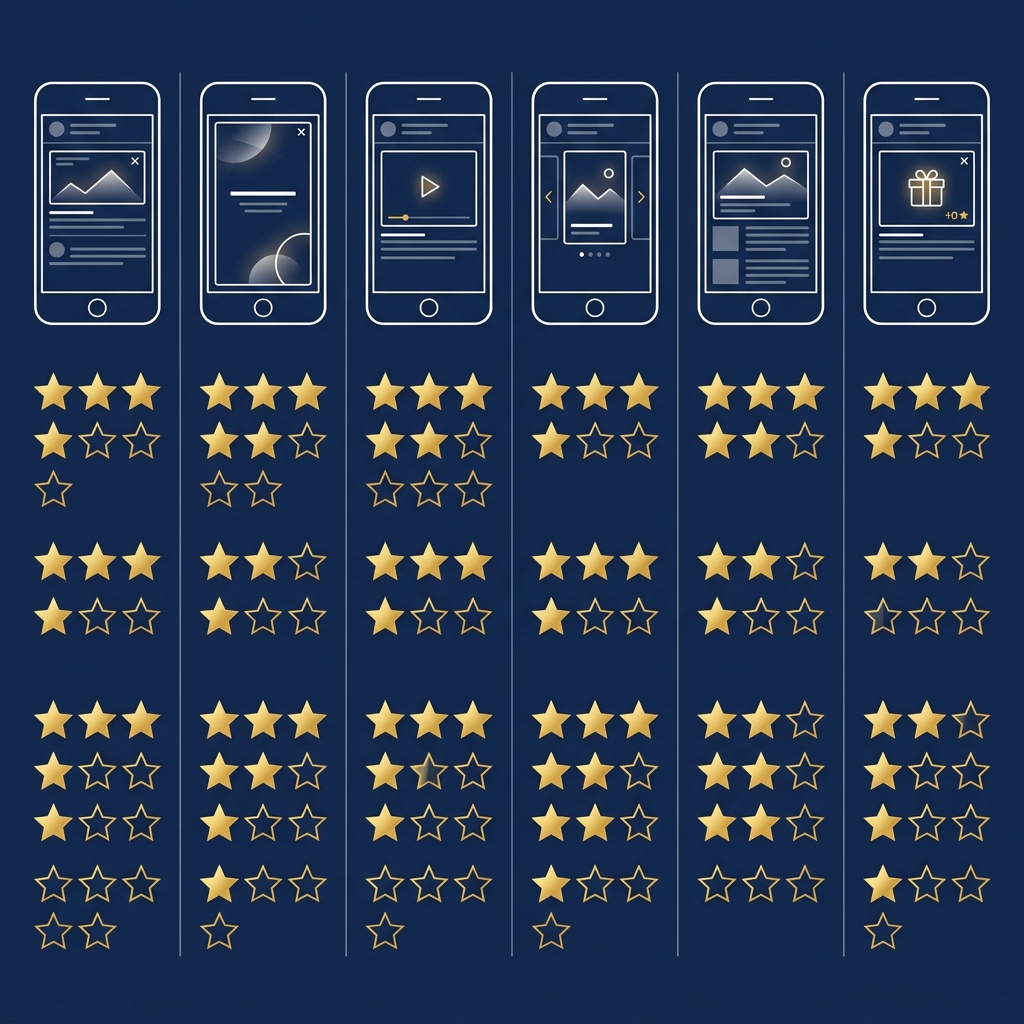
For a restaurant, that reframes your production brief. A hook swap with an identical body of copy is the weakest possible lever. What counts as a genuinely new ad is a different motivation:
- Status — "the tasting menu Mumbai food press keeps photographing"
- Occasion — an anniversary dinner, not a generic dinner
- Conviction — the chef's sourcing, shown rather than described
- FOMO — last-seats urgency on a specific date
- Belonging — a named regular's ritual, not a room full of strangers
- Convenience — a WhatsApp booking flow in under fifteen seconds
Six ads, six motivations. That is a creative library Andromeda can route. Six ads, six fonts, one motivation — that is one ad.
3. Interest targeting stopped being a boundary
Across Meta's core performance objectives, interest selections now behave as suggestions. The algorithm starts where you point it and looks outside those parameters when it finds better converters. Meta's own Advantage+ audience product documents this plainly: it "takes your usual audience selections, such as a customer list, a gender, or an interest and expands beyond them."
This is the part that gets misread. It does not mean targeting is gone. It means the specific control type changed. Meta distinguishes Audience Controls, which are hard constraints the system honours, from Audience Suggestions, which it may expand beyond. Location, age limits and exclusion lists sit on the controls side. Interests and broad audience hints sit on the suggestions side.
The Three Settings You Must Keep as Controls
Going broad is correct for most hospitality prospecting. It is wrong for three specific jobs, and restaurants hit all three constantly.
- Geography. You cannot let a Mumbai tasting menu campaign expand to Pune when your kitchen, covers and delivery radius stop at Nariman Point. Location is a control, not a suggestion — keep it there.
- Exclusions. Existing customers, recent reservations, refunded or no-show guests. An exclusion is a suppression list and it must stay hard, or you will pay to reacquire people who already booked.
- Retargeting audiences. Website visitors, Instagram engagers, video viewers — these run as manual custom audiences, not as seeds inside a prospecting Advantage+ set. Mixing cold interests and warm retargeting into one ad set gives the system contradictory signals.
Alcohol and age-restricted placements add a compliance layer on top of the same principle: if a category restriction genuinely applies, it belongs in Controls where the algorithm cannot expand past it.
How to Restructure a Restaurant Account for Andromeda
This is the structure we run now. It is deliberately boring.
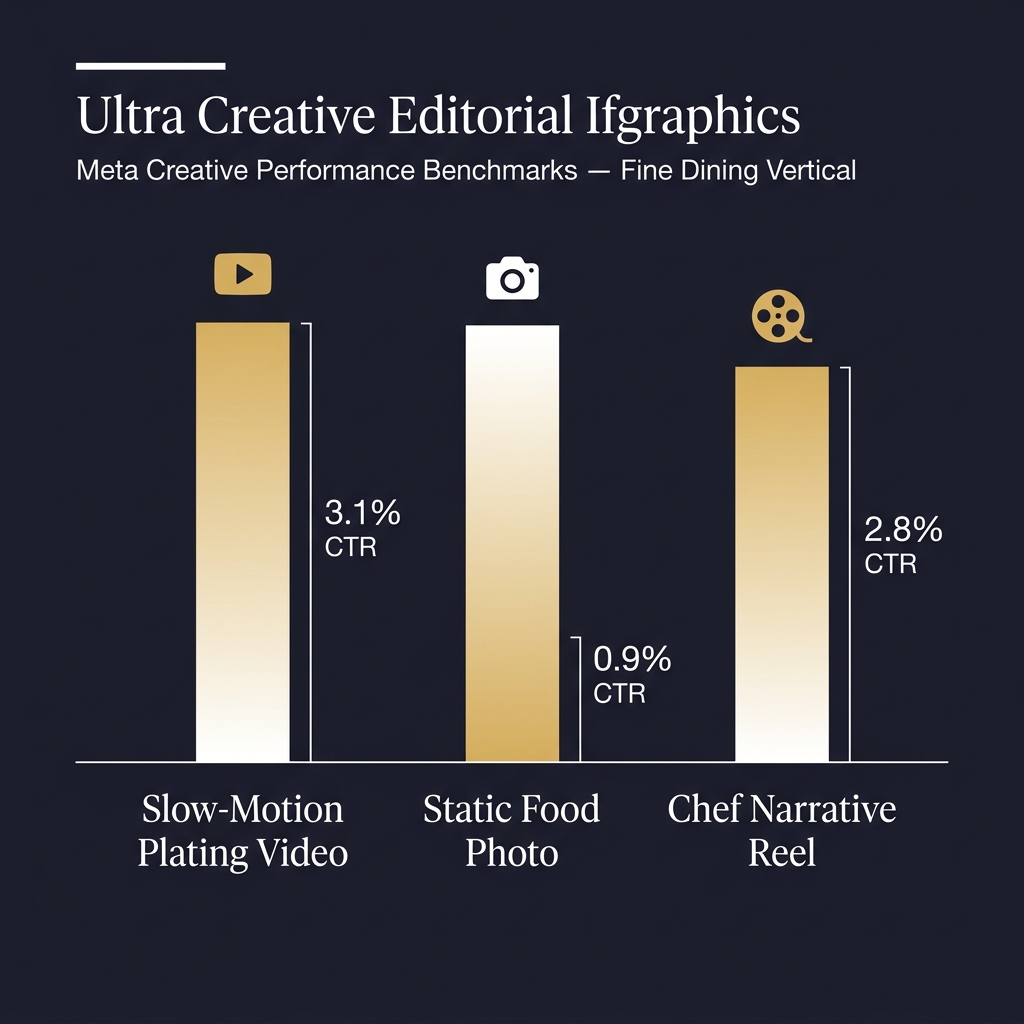
Consolidate to three ad sets
One prospecting ad set on Advantage+ audience with minimal suggestions, carrying your distinct creative library. One dedicated creative testing ad set with its own budget and a steady weekly cadence of genuinely new angles. One retargeting ad set on manual custom audiences with exclusions intact. Three ad sets. Not one per interest, not one per placement, not one per cuisine sub-segment.
Fix tracking before you touch structure
Advantage+ optimises against conversion signal, and browser-only tracking loses signal every time an ad blocker, a privacy setting or an iOS restriction interferes. For a restaurant, that means your Pixel needs a Conversions API integration sending server-side events, with event match quality reviewed rather than assumed. An account running on Pixel alone is optimising on partial information, and restructuring structure on top of partial information just scales the wrong signal faster. Our restaurant ROAS tracking guide covers the setup.
Hold a weekly creative cadence
Not daily. Weekly. Meta's own guidance to advertisers testing under the new system points to a sustained flow of new creative into the account rather than bursts, because Andromeda rewards freshness and a starved prospecting ad set decays within a few weeks. The production constraint is real — creative throughput, not audience research, is what limits most hospitality accounts. Budget for it accordingly.
Read ad fatigue as a creative signal
Creative Similarity and Ad Fatigue now surface directly in Ads Manager recommendations. When frequency climbs and cost per result follows, the correct response under Andromeda is a new angle, not a budget increase and not a new audience. The audience was never the variable that broke.
What Andromeda Will Not Fix
Andromeda amplifies what is already working. It does not repair a weak proposition, an unclear offer, or a booking flow that loses people on mobile.
If your cover price, your menu positioning or your reservation experience is unresolved, a smarter delivery engine will find you more of the wrong guests faster. This is why our fine dining Meta Ads guide still starts with objective and offer selection rather than campaign structure — the structure is now downstream of the strategy, which is the reverse of how most 2023 playbooks were built.
★ PRO TIP Before switching a working manual campaign to Advantage+ audience, run them side by side with identical creative, budget and duration for at least 14 days. Keep the manual version as a control. Without it you are trusting a platform change you cannot prove paid off — and in our experience that conversation becomes unavoidable when a client asks why CPL moved.
Frequently Asked Questions
Will Meta Andromeda replace Advantage+ campaigns?
No. They do different jobs. Andromeda is the retrieval engine underneath delivery — it decides which of your ads are eligible to compete for a specific person. Advantage+ is the campaign format and automation layer that hands it budget, placements and audience direction. You cannot turn Andromeda on or off, and it is already running. What you choose is how much control you hand over inside Advantage+.
Should a restaurant switch to Advantage+ audience?
Yes, for prospecting, if you have roughly 50 or more optimisation events per week and clean server-side tracking. Below that volume the algorithm has too little observed signal and broad targeting with strong creative gives you faster, more readable learning. Keep your retargeting and exclusion audiences on manual targeting regardless.
How many ads should I run in one ad set now?
Enough genuinely distinct concepts that the algorithm has real choices — most practitioners land between eight and twelve in prospecting, with several new concepts arriving weekly. Meta's former three-to-six guidance is obsolete. Equally, twenty colour variants of one concept is worse than five different angles, because Andromeda will group them as the same ad.
Does Advantage+ audience expand outside my city?
Not if location is set as a hard control. Location, age limits and exclusions are honoured as constraints; interests and audience hints are suggestions that Meta may expand beyond. For a single-location restaurant this distinction is the whole ballgame — check which side your location setting is on before you launch.
Do lookalike audiences still work for restaurants?
They still function, but they carry far less weight than they did. Andromeda finds lookalike-like users on its own from your conversion signal. A lookalike used as an audience suggestion inside Advantage+ can still accelerate early learning, which is a legitimate use. A standalone lookalike ad set competing for budget is usually just fragmenting the data.
Will Andromeda hurt a small restaurant with a small budget?
It can, and the cause is data volume rather than the engine. Advantage+ needs enough conversion events per week to optimise against. A single-location restaurant spending a modest monthly budget should start with broad targeting, one ad set, and its strongest creative — then graduate to Advantage+ audience once weekly conversions clear the threshold. Our guide to the 7 Meta Ads mistakes restaurants make covers the budget-side fundamentals.
How do I keep the WhatsApp and reservation conversion signal flowing?
Point your Conversions API integration at the events that represent a real booking — reservation confirmed, WhatsApp conversation initiated, table booked — rather than a generic page view. Advantage+ optimises for whatever you tell it a conversion is. If a page view is your highest-volume event, that is what the algorithm will find more of. Our WhatsApp marketing guide for fine dining covers building that channel properly.
Three Things to Take Away
- Creative is the targeting layer now. Andromeda routes by what your ad says and looks like, not by which interest box you ticked. Different motivations, not different fonts.
- Consolidate hard, but keep three things hard. Location, exclusions and retargeting audiences stay as controls. Everything else is a suggestion the algorithm is free to overrule.
- Clean signal beats clever structure. Fix your Conversions API before you restructure. Andromeda scales whatever you hand it, including your tracking gaps.
Restructuring a Meta Ads account for Andromeda is a one-to-two week job. Producing the creative library it actually rewards is the expensive part, and it is a production problem, not a media buying problem. If your account is still running the 2023 playbook, book a free strategy call and we will tell you honestly whether the restructure is worth doing this quarter or whether your creative is the real bottleneck.
Ready to apply these strategies?
We help luxury venues drive predictable direct revenue.