The Restaurant Google Reviews Playbook: How to Get More Reviews and Rank in the Local Pack
Reviews are roughly 16% of local ranking weight, and the Local 3-Pack drives 126% more traffic than anything below it. Here is the system premium restaurants in India use to earn reviews consistently — without ever buying one.


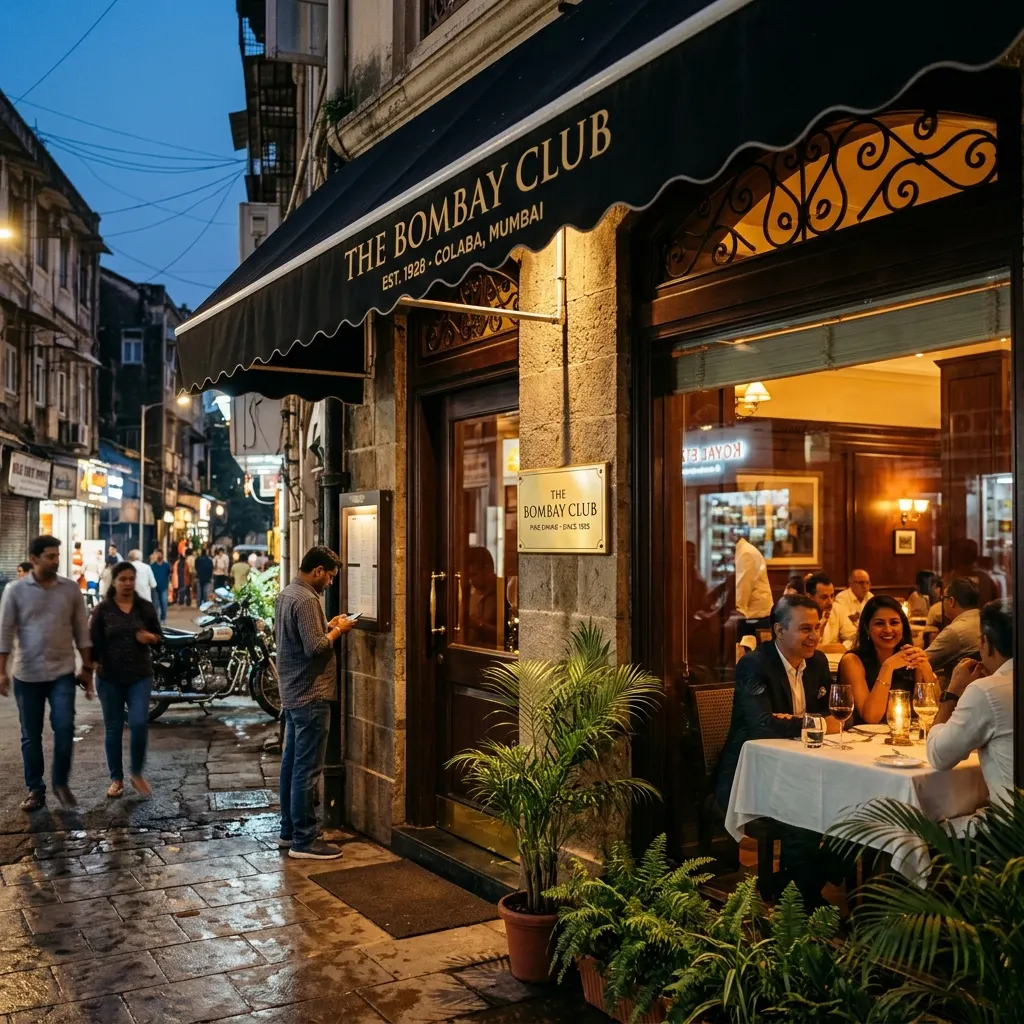
Two restaurants sit on the same street in Bandra. Similar food, similar pricing, similar interiors. One appears in Google's Local 3-Pack when someone searches "fine dining near me". The other sits on page one but below the fold, invisible to most of the people deciding where to eat tonight.
The difference is rarely the food. Very often it is reviews — how many, how recent, and whether anyone ever replied to them.
Review signals account for roughly 16% of local search ranking weight, and appearing in the Local 3-Pack generates around 126% more traffic and 93% more conversions than ranking below it. For a restaurant, that gap is the difference between a full Saturday and a quiet one.
This guide covers what Google actually measures, the benchmarks worth aiming at, how to ask for reviews without being irritating or breaking Google's rules, and how to respond in a way that protects a premium brand.
What Google Actually Measures
"Get more reviews" is incomplete advice. Google weighs three distinct signals, and most restaurants only ever optimise the first one.
1. Volume
Most local SEO research puts 100+ reviews as the practical floor for reliable Local Pack visibility in a competitive area. Below that, you are usually outranked by any comparable venue with more social proof, regardless of how good your rating is.
2. Velocity — the one almost everyone ignores
A listing with 300 reviews and none in the last six months looks dormant to Google, even with a 4.7 average. A steady flow signals an active, relevant business. Restaurants generating 3–5 new reviews per week consistently outperform those with a larger but stale review count.
This is the single most common failure we see in restaurant accounts: a big review count earned two years ago during the launch push, and near-silence since.
3. Rating
4.0 stars is the practical minimum to compete in local rankings. Above roughly 4.5, additional rating improvement matters less than volume and velocity — which is why chasing a perfect 5.0 is a poor use of energy compared to simply earning reviews consistently.
3–5 / week
New reviews per week — the velocity that correlates with stronger Google Maps and local rankings
How to Actually Earn Reviews (Without Breaking the Rules)
First, the hard line: never buy reviews, never incentivise them with a discount or free dish, and never filter so only happy guests are asked. All three violate Google's prohibited and restricted content policy and risk your reviews being stripped or the profile penalised. Beyond the compliance risk, bought reviews read as fake to exactly the discerning guests a premium venue wants.
What works is removing friction at the moment satisfaction peaks.
Ask at the Right Moment
The highest-yield window is immediately after a good experience — as the bill is settled, or within a few hours of the guest leaving. Ask a day later and the emotional peak has passed; ask a week later and you are asking a stranger for a favour.
Make It One Tap
- Google review short link: Generate the direct review link from your Google Business Profile and use it everywhere. Every extra step — searching for the venue, scrolling to find the review button — loses a meaningful share of people.
- QR code on the bill folder: The highest-converting placement for dine-in. Printed on the bill presenter, it reaches the guest at the exact moment they are reflecting on the meal.
- WhatsApp follow-up: In India this outperforms email substantially. If you already run a WhatsApp channel, a short thank-you with the review link a few hours after the visit is the single most effective mechanism available to you.
- Train the floor team to ask: A server who has genuinely connected with a table can ask directly, and it converts far better than any automated message. This costs nothing and most venues never do it.
★ AGENCY INSIGHT The most common mistake we see is treating reviews as a one-off campaign — a push for two weeks, then nothing for a year. Google reads that pattern as a business that was busy once. Ten reviews a month, every month, beats a hundred reviews in one month followed by silence. Build it into the closing routine, not the marketing calendar.
Responding: Where Most Premium Venues Lose
Responding to reviews within 48 hours is a confirmed ranking factor, and it is entirely within your control. It is also where restaurants damage themselves most visibly, because every future guest reads the replies.
Positive Reviews
Reply to every one. Keep it short, specific, and human — reference the dish or occasion they mentioned. A copy-pasted "Thank you for your feedback!" under thirty reviews signals indifference more clearly than not replying at all.
Negative Reviews
This is the part that matters for a premium brand, because prospective guests read the one-star reviews first and judge you by the response, not the complaint.
- Reply within 24 hours. Speed itself reads as attentiveness.
- Never argue publicly, never blame the guest. You will not win, and everyone watching sees a defensive business.
- Acknowledge, take it offline, follow through. Apologise for the experience, offer a direct contact, and actually resolve it privately.
- Do not offer compensation in the public reply. It reads as buying silence, and it invites bad-faith complaints.
A calm, specific, non-defensive reply to a harsh review often converts more prospective guests than the review cost you.
Where Reviews Fit in the Bigger Picture
Reviews are one of six local ranking signal groups: Google Business Profile (~32%), on-page (~19%), reviews (~16%), links (~15%), behavioural (~8%) and citations (~7%). Reviews will not rescue a neglected profile — they compound with it.
So pair this with a properly optimised profile: correct categories, complete hours, real photos, and every Q&A answered. Our Restaurant SEO and Google Business Profile guide covers that side in full. Reviews also increasingly feed AI-generated recommendations — recency and sentiment are exactly what those systems weigh, as covered in our AI search playbook.
Frequently Asked Questions
How many Google reviews does a restaurant need to rank in the Local Pack?
Around 100 reviews is the practical floor for reliable Local 3-Pack visibility in a competitive urban area, though the exact number depends on what nearby competitors have. Volume alone is not enough — a steady flow of recent reviews matters as much as the total, and a 4.0+ average rating is the minimum to compete.
How often should a restaurant get new Google reviews?
Aim for 3–5 new reviews per week. That velocity signals to Google that the venue is active and relevant. A listing with hundreds of reviews but none in the last six months reads as dormant, even with an excellent average rating.
Can a restaurant offer a discount in exchange for a Google review?
No. Incentivising reviews violates Google's policies and can result in reviews being removed or the Business Profile penalised. It also attracts low-quality reviews that read as inauthentic to exactly the discerning guests a premium restaurant wants to attract. Ask at the right moment and remove friction instead.
How quickly should a restaurant respond to reviews?
Within 48 hours for positive reviews and within 24 hours for negative ones. Response time is a confirmed local ranking factor, and prospective guests judge a venue heavily on how it handles criticism publicly. Acknowledge the issue, avoid arguing, and move the resolution to a private channel.
Should a restaurant respond to every single review?
Yes, ideally — but with genuine, specific replies rather than a repeated template. Referencing the dish or occasion the guest mentioned takes seconds and reads as a business that actually pays attention. Thirty identical copy-pasted thank-yous signal the opposite.
The Bottom Line
Reviews are the cheapest local ranking lever available to a restaurant, and the most neglected. They require no ad budget, no agency, and no technical work — only a consistent habit built into how the venue closes out a guest's visit.
Start this week: generate your Google review short link, get it onto the bill folder as a QR code, brief the floor team to ask when a table has clearly enjoyed itself, and reply to every review sitting unanswered right now. That alone will move you ahead of most restaurants on your street.
For the full data behind this — response-rate benchmarks, revenue impact of replying to reviews, and loyalty-program numbers alongside them — see our restaurant guest data statistics for 2026.
Want This Built Into Your Venue's Routine?
ThePieCraft runs local SEO and reputation systems for premium restaurants, cafés and hotels across India — profile optimisation, review capture, and response frameworks your team can actually sustain. Book a free 30-minute strategy call and we will audit where your local visibility is leaking.
Ready to apply these strategies?
We help luxury venues drive predictable direct revenue.