Zomato and Swiggy Commission in 2026: What You Actually Pay Per Order
Commission is 25–27% before GST and platform fees — closer to 25–35% all-in. Here is the real per-order arithmetic, what a 30-orders-a-day kitchen loses monthly, and the levers that genuinely reduce it.


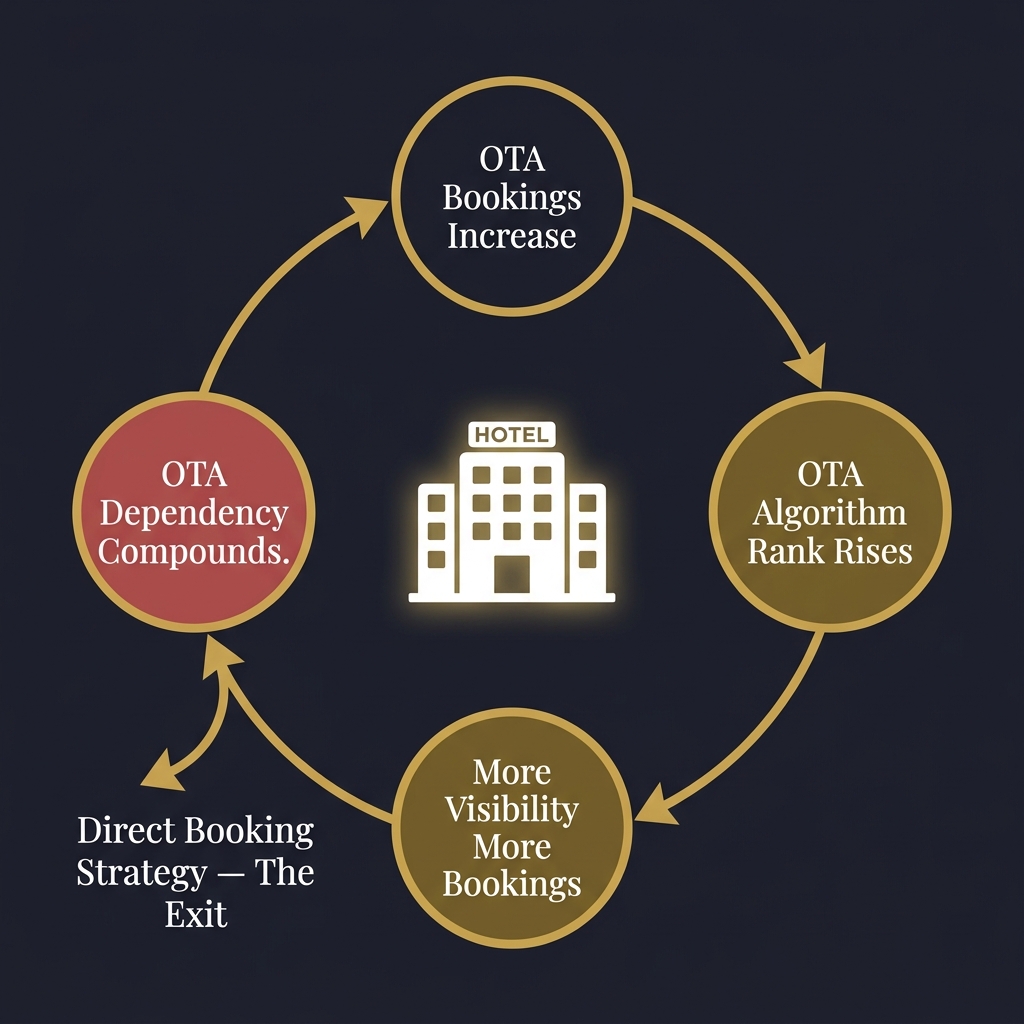
Zomato and Swiggy charge roughly 25–27% commission on order value for a single-outlet restaurant. Add GST on that commission, payment gateway charges and the flat platform fee and the true cost lands near 25–35% per order. A kitchen doing 30 orders a day at ₹400 average pays about ₹1.2 lakh a month in platform costs.
Most owners know the headline commission. Far fewer have sat down and worked out what leaves the business per order once everything is stacked, which is why the monthly payout statement so often feels worse than expected.
This is that arithmetic, done plainly.
What Is the Actual Zomato and Swiggy Commission Rate?
For a single-outlet restaurant in 2026, base commission sits around 25–27% of order value on both platforms. Rates vary with city, cuisine category, outlet count and whatever was negotiated at onboarding, so treat that as the middle of a range rather than a fixed figure.
What makes the effective rate higher is everything layered on top:
- GST on the commission itself — you are taxed on the fee, not just the food.
- Payment gateway charges on the customer's transaction.
- Flat platform fee per order.
- Packaging, which you absorb and the platform does not.
- Discounts and campaign contributions, if you have opted into any promotion — this is the one owners most often forget is theirs to fund.
Stack those and the all-in cost commonly reaches 25–35%.
What Does That Cost Per Month?
| Daily orders | Average order | Approx. monthly platform cost |
|---|---|---|
| 30 | ₹400 | ~₹1.2 lakh |
| 100 | ₹500 | ~₹4.4 lakh |
Read the first row again. A modest kitchen, 30 orders a day, is sending well over a lakh a month to the platform — recurring, on every order, forever, for a customer whose phone number you never receive.
Run It on Your Own Numbers
Take your monthly aggregator revenue and multiply by 0.30 for a realistic all-in estimate. On ₹5,00,000 of delivery revenue that is roughly ₹1,50,000 a month, or ₹18 lakh a year. Compare that against the cost of acquiring a guest through channels you control — a well-built Meta funnel commonly lands at ₹250–₹700 per cover, paid once, for a guest you can then reach for free.
★ THE COMPARISON NOBODY RUNS Commission is a permanent toll. Acquisition is a one-time cost. On a ₹3,500 cover the aggregator takes ₹875–₹1,225 every single time that guest orders. Acquiring the same guest directly costs less than the commission on one order — and afterwards you hold the phone number, the WhatsApp opt-in and the order history.
How Do I Reduce Zomato and Swiggy Commission?
Straight answer first: you will not negotiate your way to a materially lower rate as a single outlet. The levers that work are structural.
1. Stop funding discounts you did not need
Audit every active promotion. Platform-suggested discounts are frequently funded partly or wholly by you and quietly widen the gap between listed price and net payout. Some drive genuine incremental volume; many subsidise orders you would have received anyway.
2. Reprice for the channel
Delivery menu pricing should reflect delivery economics. Many kitchens run identical pricing across dine-in and delivery and absorb 30% on the delivery side. Pricing the channel is standard practice, not sharp practice.
3. Build a direct ordering path
WhatsApp ordering, a simple order page, or a phone line promoted on packaging. It will not replace aggregator volume and it does not need to. Moving even 20% of repeat orders direct is a 20% reduction in the commission base.
4. Convert aggregator customers into owned ones
Every delivery bag is a touchpoint. An insert offering something worthwhile in exchange for a WhatsApp opt-in converts a rented customer into one you own. This is slow, cheap and compounding — the full method is in our WhatsApp marketing playbook.
5. Judge aggregator ads on cost per order, not visibility
If you also run Zomato or Swiggy ads, that spend sits on top of commission. Our aggregator ads guide covers how to structure it so you are not paying twice for the same order.
Should I Leave the Aggregators Entirely?
For most restaurants, no — and anyone telling you otherwise is selling something. Aggregators are genuinely good at discovery and at delivery logistics you would struggle to replicate. The mistake is treating them as the whole strategy rather than one channel.
The workable position is a split: aggregators for acquiring new customers, owned channels for keeping them. That way you pay the toll once per guest rather than forever.
Frequently Asked Questions
How much commission do Zomato and Swiggy charge in 2026?
Base commission is roughly 25–27% of order value for a single-outlet restaurant on both platforms. After GST on the commission, payment gateway charges and the flat platform fee, the effective all-in cost typically reaches 25–35% per order. Rates vary by city, category and outlet count.
How much does aggregator commission cost per month?
A restaurant doing 30 orders a day at a ₹400 average order value pays roughly ₹1.2 lakh a month in commission, GST and packaging. At 100 orders a day and ₹500 average, monthly platform cost rises to about ₹4.4 lakh. A quick estimate for your own outlet is monthly aggregator revenue multiplied by 0.30.
Can a restaurant negotiate a lower Zomato commission?
Single outlets have very little leverage; rates are largely standardised by city and category. Multi-outlet groups and chains have more room. In practice the effective rate falls further by auditing self-funded discounts, pricing the delivery menu for its own economics, and moving repeat orders to direct channels than by negotiating the headline percentage.
Is it cheaper to acquire customers through ads than pay commission?
Usually, on repeat customers. Commission recurs on every order in perpetuity, whereas acquisition is paid once. A well-structured Meta funnel commonly acquires a cover at ₹250–₹700, which is less than the commission on a single ₹3,500 order — and it leaves you holding the customer relationship rather than renting it.
Should restaurants stop using Zomato and Swiggy?
For most, no. Aggregators are effective at discovery and provide delivery logistics that are difficult and expensive to replicate independently. The sustainable approach is to use them for acquiring new customers while building owned channels — WhatsApp, direct ordering, email — to retain those customers commission-free.
The Bottom Line
Commission is not inherently unfair; it buys real distribution. It becomes a problem when it is the only channel, because then every customer is rented and the rent never stops.
Work out your own number this week: monthly aggregator revenue times 0.30. Whatever that figure is, it is the budget you are already spending on customer acquisition — you simply do not control where it goes or who it brings back.
Ready to apply these strategies?
We help luxury venues drive predictable direct revenue.